Cohort Analysis with AI
Retention heatmaps, lifecycle trends, and churn risk — generated automatically from your data with validated, auditable pipelines.
What Is Cohort Analysis?
Cohort analysis groups users who share a common characteristic — typically a signup date, first purchase, or campaign source — and tracks how their behaviour evolves over time. It answers questions like:
- Are users from Q1 retaining better than Q4?
- Which acquisition channel produces the highest lifetime value?
- At what point do most users churn, and is it getting better or worse?
Traditional cohort analysis requires writing complex SQL window functions, manually bucketing users, and stitching together pivot tables. Yorph replaces that entire workflow with a single conversational prompt — and backs every result with a transparent, auditable pipeline.
How Yorph Solves Cohort Analysis
Yorph doesn't just answer "what's retention?" — it builds a structured, repeatable analysis pipeline using the same methodology we apply to every complex analytical problem.
Structured Method Selection
Rather than jumping straight to a query, Yorph first selects the right cohort methodology for your data — time-based cohorts, behavioural cohorts, or acquisition-source cohorts — and determines the optimal granularity (weekly, monthly, quarterly) based on your data density and question. The agent confirms with the user specific business logic if needed as well.
Multi-Agent Planning
Before writing a single query, multiple AI agents independently propose analysis plans — exploring different cohort definitions, metric choices, and segmentation strategies. A reviewer agent selects and combines the best elements into a unified analysis framework, ensuring your cohort analysis captures the right signal from the start.
Modular, dbt-Backed Pipeline
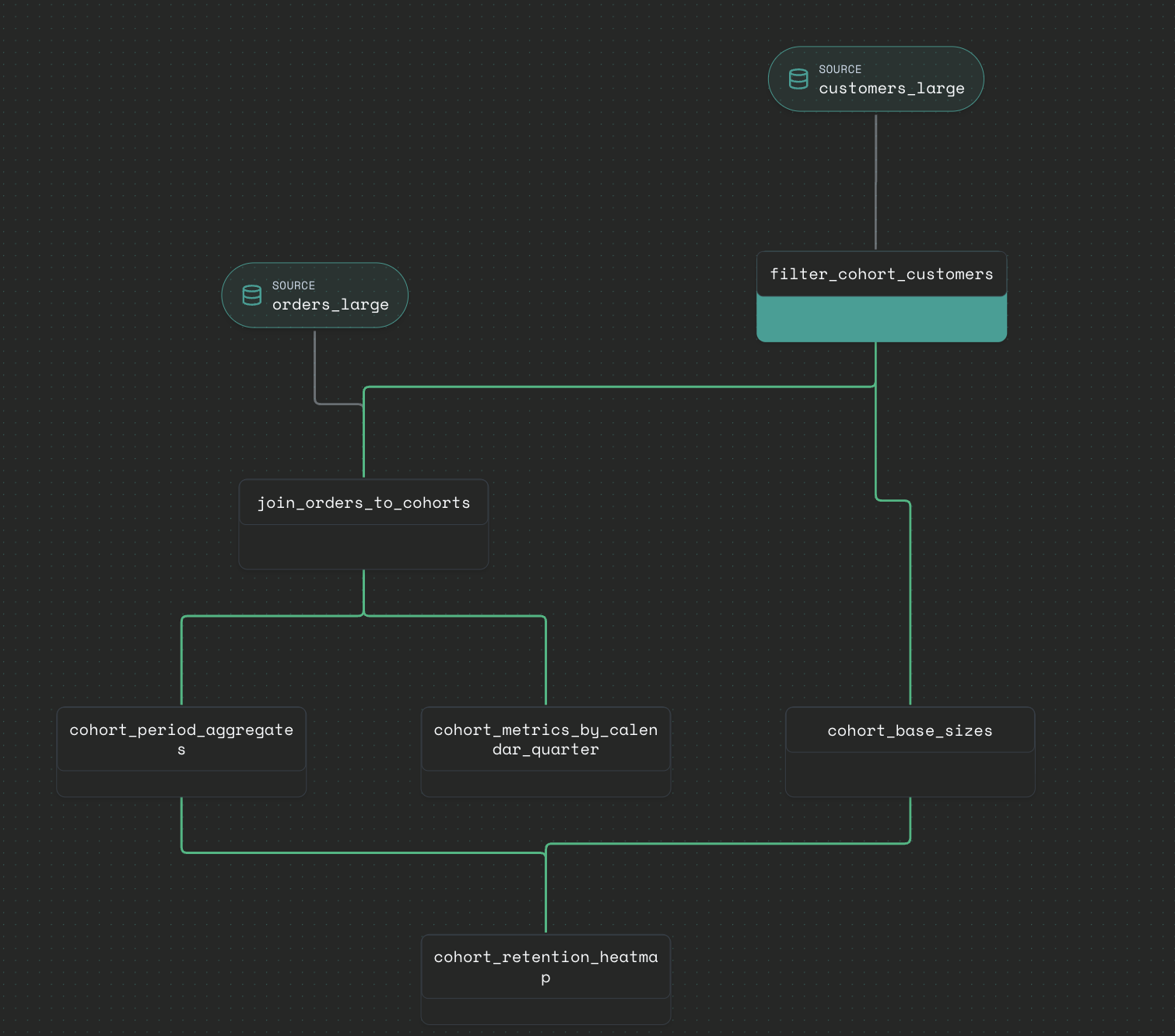
Yorph doesn't produce a one-off query. It creates a modular pipeline with discrete steps: data cleaning, user bucketing, retention window calculations, and aggregation. Each step is versioned, editable, and reusable — so your cohort logic becomes an operational asset, not a throwaway query.
Code Writing & Validation Loops
Multiple agents write and validate the SQL pipeline in parallel. Each step passes through a validation loop — checking grain correctness, null detection, join explosions, and delta reconciliation. If any check fails, the agent loops back, adjusts, and reruns automatically until the results are correct.
Schedule & Operationalise
Once validated, your cohort pipeline can be scheduled to run weekly, monthly, or on any custom cadence. The full dbt project, semantic layer, and pipeline code are stored — turning a one-time analysis into a recurring operational asset.
Insights, Visuals & Assumptions
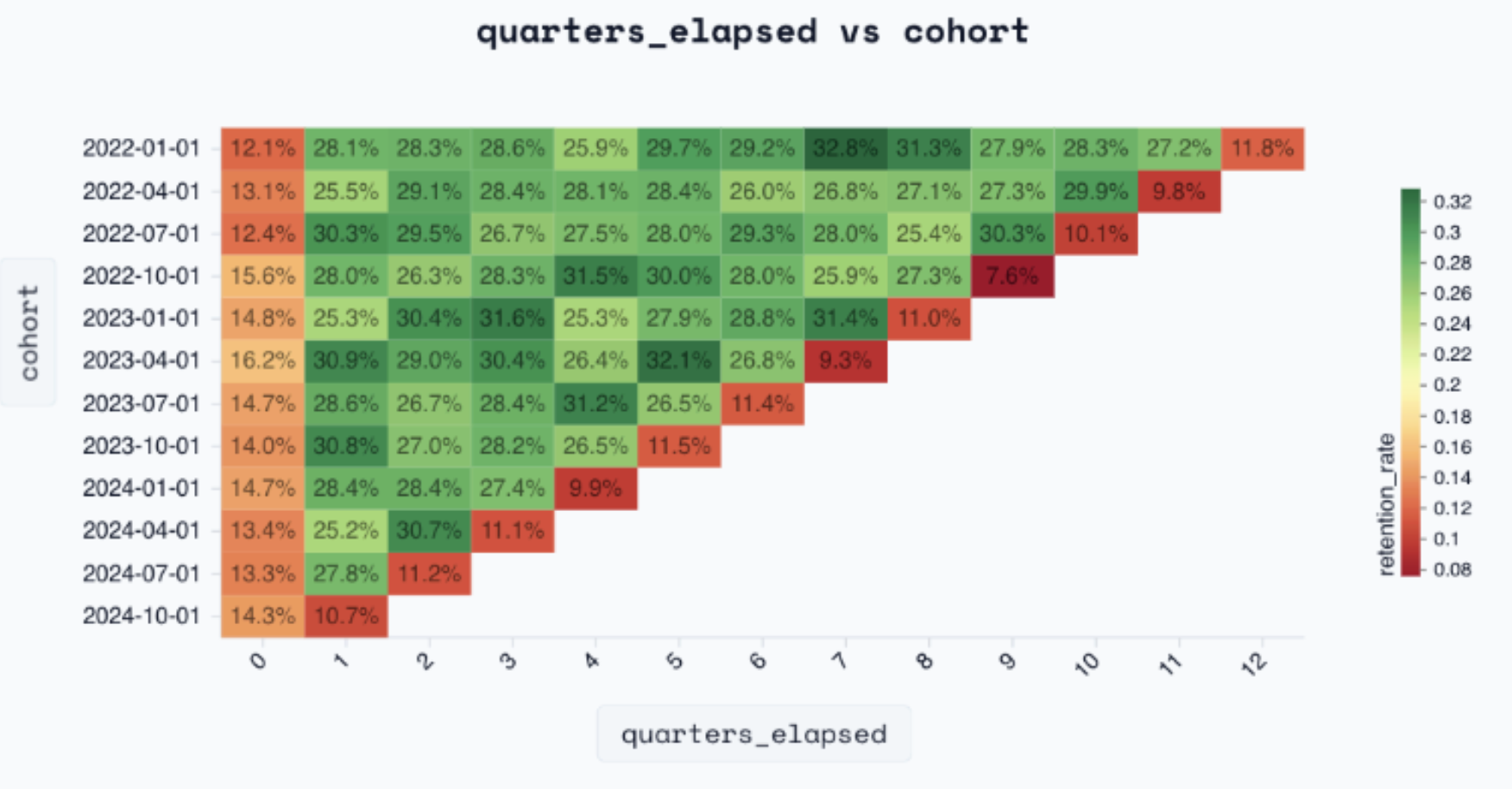
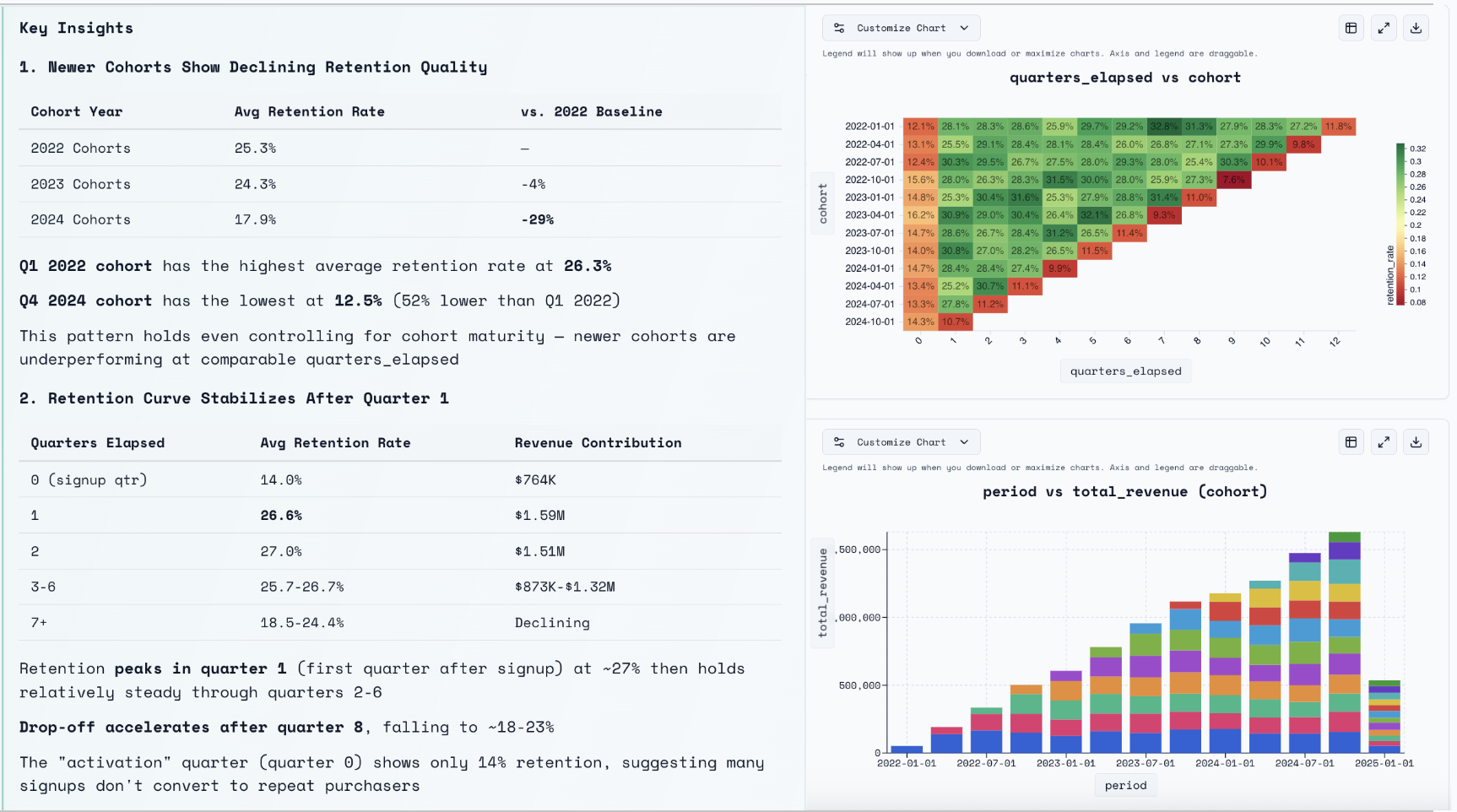
After validation, Yorph produces retention heatmaps, cohort curves, and natural-language summaries. Crucially, it also reports every assumption — how "active" was defined, which users were excluded, what cleaning was applied — so you can share results with full confidence.
The Cohort Analysis Pipeline
Every cohort analysis produces a modular, versioned pipeline — fully inspectable from source tables through to the final retention heatmap.
Frequently Asked Questions
What is cohort analysis?
Cohort analysis groups users by shared characteristics — like signup month — and tracks their behaviour over time to reveal retention patterns, lifetime value trends, and engagement drop-offs.
What data do I need?
At minimum you need a user identifier, an event timestamp, and the metric you want to track (e.g. purchases, logins). Yorph works with CSVs, databases, and warehouse connections.
Can Yorph handle monthly, weekly, and custom cohorts?
Yes. Yorph automatically detects the best granularity or lets you specify weekly, monthly, quarterly, or fully custom cohort windows.
How do I know the cohort results are correct?
Every cohort analysis is backed by a versioned SQL pipeline you can inspect step-by-step. Yorph also runs validation checks to catch missing data, bad joins, and numbers that don't reconcile — before producing results.
Can I schedule recurring cohort reports?
Yes. Once your cohort pipeline is validated, you can schedule it to run on any cadence and receive updated retention heatmaps automatically.
Ready to Run Your First Cohort Analysis?
Start for free — no SQL required. Get validated retention heatmaps in minutes.
Get Started Free